
Xreal reveals more on Project Aura, its tethered Android XR glasses, at Google I/O
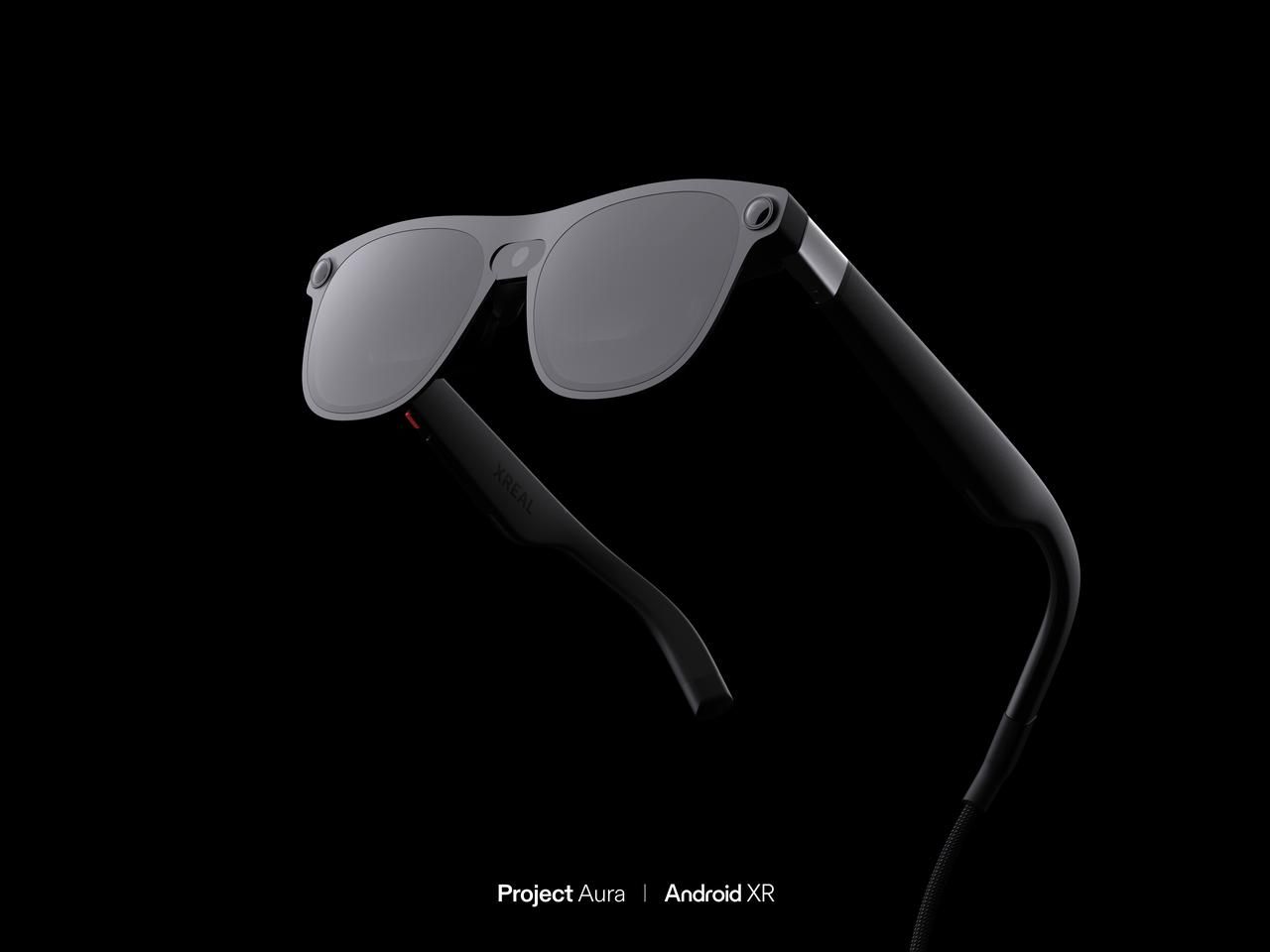
Image: Xreal
Xreal has shared the first detailed look at Project Aura, its tethered Android XR glasses, at Google I/O 2026. The company confirmed a global launch before the end of the year, though pricing and an exact release date are still to come.
The device is the second hardware product built on Android XR after Samsung’s Galaxy XR, and the first to use an optical see-through design. Wearers look through the lenses to the real world rather than at a video feed from cameras. A separate compute puck handles processing, which keeps the glasses themselves light enough to wear for extended periods.
What was shown at I/O
Demonstrations at the conference included Google Maps in immersive 3D, 180- and 360-degree YouTube playback, and integration with Gemini AI for voice and multimodal interaction. Xreal also showed the glasses connected to a laptop over DisplayPort, projecting a desktop environment into the wearer’s field of view.
Project Aura is built on a Qualcomm Snapdragon XR chipset, the result of a three-way partnership between Xreal, Google and Qualcomm. Earlier Xreal glasses used the company’s own X1 silicon.
A developer program comes first
Alongside the hardware update, Xreal and Google announced the Android XR Developer Catalyst Program. Selected developers will receive Aura devkits and Android XR tooling ahead of the consumer launch. Applications are open at g.co/dev/catalyst, with the first kits shipping in the coming weeks.
Why it matters beyond consumer XR
Project Aura is positioned as a consumer device, not a clinical one. A tethered, look-through-glass form factor also sits some distance from the sealed, sterile-field hardware used in operating rooms. Still, two things are worth watching for the medical-XR community.
First, Android XR is now visibly becoming a serious third platform alongside Apple’s visionOS and Meta’s Horizon OS. A multi-platform XR landscape changes the calculus for hospitals and vendors that have been wary of betting on a single ecosystem.
Second, the form factor itself matters. Lightweight optical see-through glasses with capable processing, voice AI and a familiar Android development stack lower the cost and complexity of building XR applications. That includes the patient-facing, educational and rehabilitation tools that medical XR teams have been waiting for the hardware category to mature into.
Comments
A static site cannot store comments itself. Connect a lightweight service such as Giscus (stores threads in a GitHub repo) or a hosted tool. See the README.